
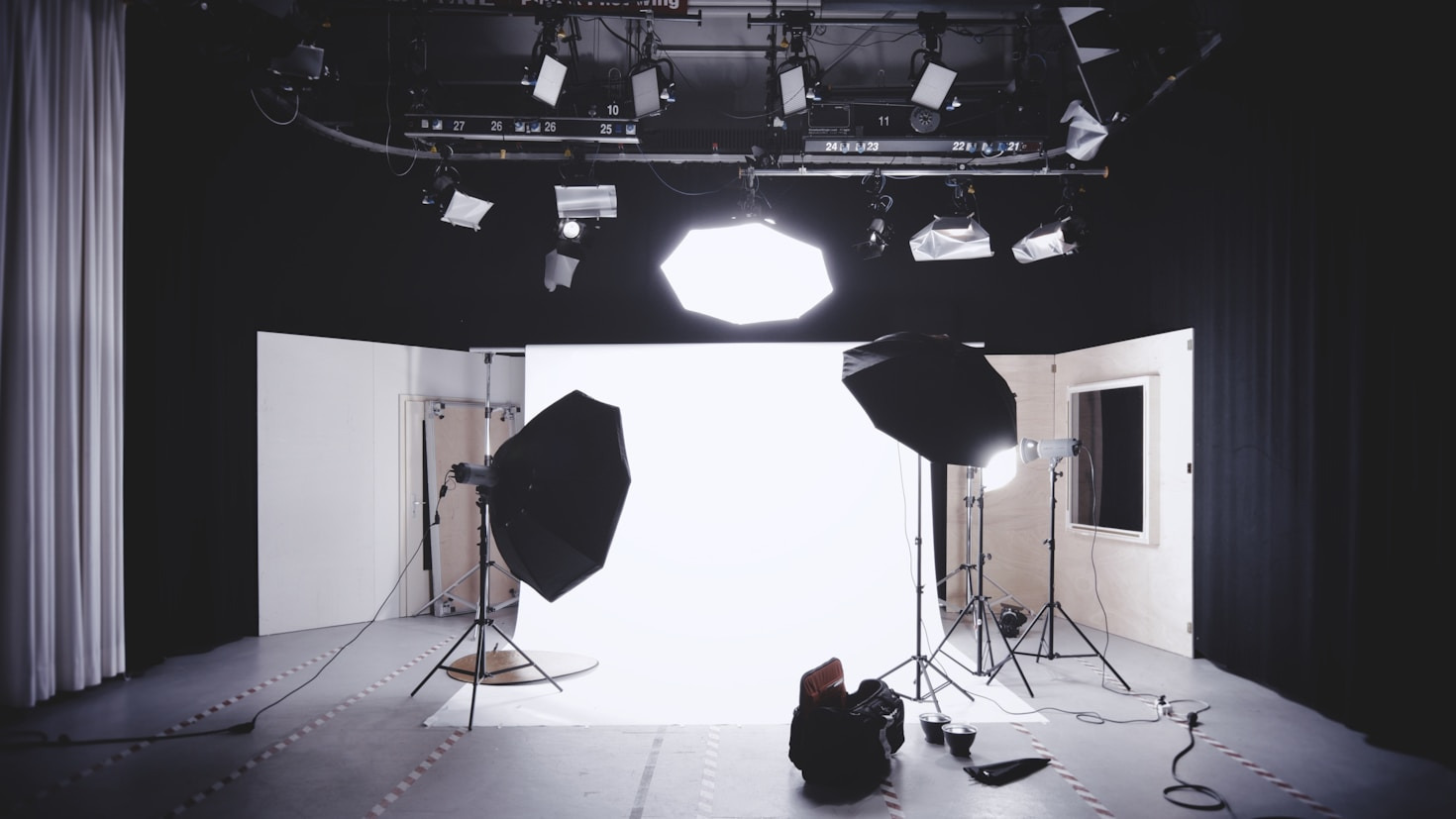
Two disciplines that seem to belong to entirely different worlds turn out to share the same fundamental obsessions — with light, with framing, with the relentless pursuit of the right moment.
Cross-Discipline Series
▪ 01 👁 Attention to Detail – Visual discipline
▪ 02 🖼 Composition Thinking – Spatial logic
▪ 03 ⏱ Patience & Timing – Flow & iteration
At first glance, a camera and a code editor have nothing in common. One captures light; the other arranges logic. One produces images; the other produces systems. But spend time with a software developer who also practices photography, and a pattern emerges — a particular kind of mind that thinks simultaneously about the present state and the finished form, about what to include and what to ruthlessly exclude, about the difference between what is there and what is seen.
Photography is not simply a hobby that happens to coexist with a technical career. For the developers who practice it seriously, it quietly reshapes the way they approach every problem they write code to solve. The discipline of the lens teaches lessons that no programming tutorial covers — and they turn out to be among the most valuable lessons in the craft.
The Shared Parallelsparallel_map.json
In Photography — ≡ — In Code
Choosing the frame: what stays in, what falls out ↔ Defining scope: what the function does and doesn’t do
Exposure triangle: balancing competing variables ↔ System tradeoffs: speed, memory, readability
The decisive moment: waiting for conditions to align ↔ Timing a release: when the work is actually ready
Editing in post: removing what weakens the image ↔ Refactoring: deleting the code that doesn’t earn its place
Reading light: understanding the environment first ↔ Reading context: understanding the system before touching it
Five Ways the Lens Sharpens the Engineerlessons[]
👁 Attention to Detail
Photographers train themselves to notice what others overlook — the crack in the pavement, the shadow that changes meaning, the expression that exists for a quarter of a second. Developers who cultivate this attention catch edge cases earlier, spot the assumption buried in the requirement, and notice the user behaviour that everyone else explained away.
🖼 Thinking in Composition
Every photograph is a decision about relationships — between foreground and background, between subject and negative space. Software architecture demands the same spatial thinking: how do these components relate? What should sit at the centre of this system? What can safely exist at the edges? The compositional eye is transferable, completely.
✂️ The Discipline of Subtraction
Ansel Adams said that “dodging and burning are steps to take care of mistakes God made in establishing tonal relationships.” The equivalent in code: refactoring is not a clean-up task — it is the work of removing what should never have been there. Photography teaches that less, done with intention, consistently outperforms more done without it.
💡 Reading the Environment
Before a seasoned photographer raises the camera, they read the light — its quality, direction, and what it reveals versus conceals. Before a senior developer writes a solution, they read the codebase — its patterns, its tensions, its history. Both are practices of deep observation before action. Both separate the expert from the technician.
⬡ Both the photographer and the engineer are, fundamentally, in the business of
making the invisible visible — one through light, one through logic.
The Deeper Connectionsynthesis.md
There is something more profound at work than a list of shared skills. Photography, practiced with seriousness, is a discipline of sustained, empathic attention to the world outside yourself. It trains you to watch how people move through space, how they interact with objects and light, where their gaze falls and where it lingers. This is, at its core, the same attention that separates the developer who builds software people actually use from the one who builds software that is technically correct but experientially confusing.
The best UI designers in the world are often deeply visual thinkers who have spent years studying how human beings perceive and interpret images. The developers who collaborate most effectively with designers are often those who share enough of that visual vocabulary to understand what is being asked, and why. Photography builds that vocabulary — patiently, image by image, one walk at a time.
⬡ shutter: 1/∞ ⬡
There is no formula here, no productivity hack, no plugin that installs visual intelligence into an IDE. What photography gives a developer is subtler and more durable: a practice of looking carefully before acting, of seeing the frame before pressing the shutter, of understanding that what you leave out defines the quality of what remains. These are not photography skills. They are thinking skills. And thinking, it turns out, is the one bottleneck that no technology has ever truly optimized away.
Pick up the camera. Go somewhere without a specific goal. Practice noticing. You may be surprised how much of what you find there appears, the following Monday morning, in the quality of your code.article together but also inspires readers to engage further.
Leave a Reply